Everybody wants to japa. The part nobody prepares you for is the money. The moment you start checking Canada, the UK, or the United States, the proof of funds alone can run into tens of thousands of dollars before you have even bought a ticket. So a lot of people give up too early, convinced that leaving Nigeria is only for people with deep pockets.
It is not. There is a whole tier of countries where the tuition is low or free, the cost of living is gentle, and you are allowed to work while you study. This guide breaks down the genuinely cheap places to japa to in 2026, what each one actually costs, and how to pick the one that fits your budget.
JapaMap Tools Plan your next move
Estimate your relocation budget in 2 minutes
Use the JapaMap cost calculator before you start any application.

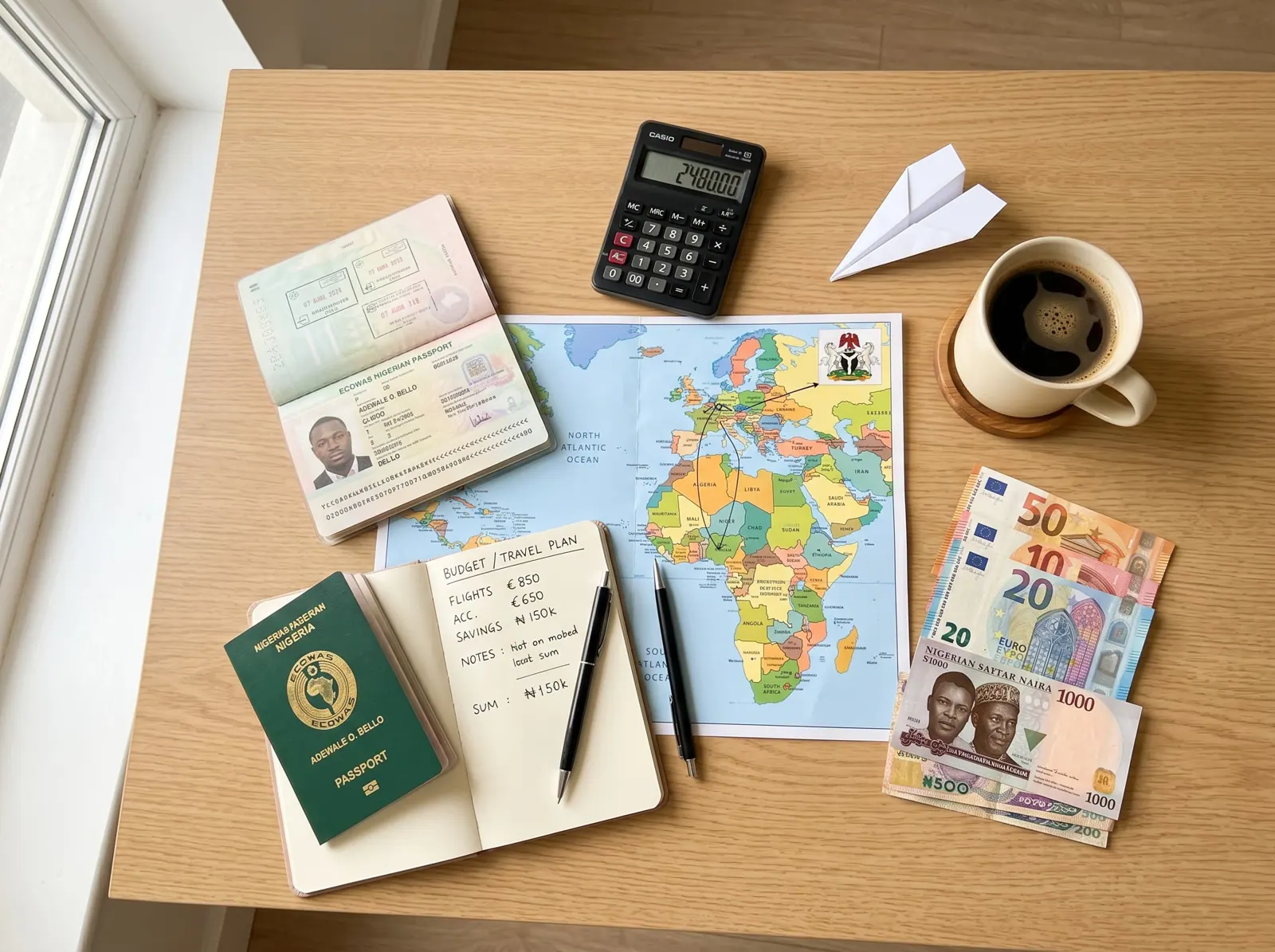
One thing before we start: cheap does not just mean low tuition. A country with free school but brutal living costs is not cheap. So we are judging each place on four things together: tuition, living costs, the proof of funds you must show for the visa, and whether you can legally work while you are there.
Germany: the overall winner
If you want one answer, this is it. Most public universities in Germany charge no tuition, even for international students. You only pay a semester contribution, usually around €250 to €350, which often covers your public transport for the whole term. Living costs in student cities like Berlin, Hamburg, and Leipzig sit around €800 to €1,000 a month.
The one number to plan for is the blocked account. To get the student visa, you must show roughly €11,904 for the year, which works out to about €992 a month. Remember, that is money you must prove you have, not money you lose. It is released back to you monthly to live on once you arrive. You can also work part-time, which makes the day-to-day far easier.
For a fully funded degree with a clear path to staying back and working after, nothing beats Germany on value.

Poland
Poland has quietly become one of the smartest budget moves in Europe. Tuition at public universities runs about €2,000 to €6,000 a year, and living costs are among the lowest on the continent at roughly €400 to €700 a month. Cities like Warsaw and Krakow are lively but still far cheaper than Western Europe, and many programmes are taught fully in English.
Hungary
Hungary pairs affordable tuition, about €3,000 to €7,500 a year, with low living costs of around €500 to €800 a month. The bigger draw is the Stipendium Hungaricum scholarship, a fully funded government programme that Nigerians are eligible for, which can wipe out tuition entirely and add a living stipend. If you are open to scholarships, Hungary deserves a hard look.
Czech Republic
The Czech Republic is cheaper than most of Western Europe. If you study in the Czech language, public universities can be free. Programmes taught in English are still affordable at roughly €3,000 to €8,000 a year, with monthly living costs around €500 to €900. Prague is the headline city, but smaller towns stretch your money even further.
Finland
Finland is the surprise on this list. Tuition for non-EU students looks high on paper, around €4,000 to €12,000 a year, but most universities offer tuition waivers of up to 100 percent for strong applicants, which can bring your real cost down to almost nothing. Living costs run from €800 to €1,500 a month, and you are allowed to work up to 25 hours a week. The education quality, especially in design, engineering, and technology, is world-class.
Romania
Romania is one of the most underrated cheap options in Europe. Tuition sits around €2,000 to €4,000 a year; living costs are low, and there are degrees taught in English. It rarely makes the loud lists, which also means less competition for places.
Malaysia: the option outside Europe
If Europe is not your target, Malaysia offers a respected English language education at a very low cost. Tuition is roughly the equivalent of a few thousand dollars a year, and the cost of living is a fraction of what you would spend in the West. It is a strong pick for anyone who wants an international degree on a tight budget without the European winter.
How do these compare to Canada, the UK, and Australia
To see why the list above counts as cheap, line it up against the popular expensive trio. Canada now asks you to show about CAD$22,895 in proof of funds, and that figure rises every year. Australia requires roughly AUD$29,710 a year in living costs on top of tuition that often runs past AUD$25,000. The UK expects around £1,023 a month in maintenance outside London, plus full tuition and a yearly health surcharge.
None of those are impossible, but next to a free German degree or a €2,000 Polish tuition, you can see exactly where the savings are.
Quick cost comparison
| Country | Tuition per year | Living per month | Notes |
|---|---|---|---|
| Germany | Free, plus ~€300 semester fee | €800 to €1,000 | Show ~€11,904 blocked account |
| Poland | €2,000 to €6,000 | €400 to €700 | Lowest living costs |
| Hungary | €3,000 to €7,500 | €500 to €800 | Stipendium Hungaricum scholarship |
| Czech Republic | Free in Czech, €3,000 to €8,000 in English | €500 to €900 | |
| Finland | €4,000 to €12,000, often waived | €800 to €1,500 | Up to 100% waivers |
| Romania | €2,000 to €4,000 | Low | Underrated, less competition |
| Malaysia | A few thousand dollars | Very low | Non European option |
Figures are current for 2026 and move often, so always confirm on the official university and embassy pages before you plan around them.
How to actually choose
Do not pick on tuition alone. Weigh the total: tuition plus living plus the proof of funds you must show, then check two more things that quietly decide everything. First, can you work while you study? That income changes your real cost. Second, what happens after you graduate, since a stay-back and work pathway is the difference between a degree and an actual relocation?
If a scholarship is on the table, like Stipendium Hungaricum or a Finnish waiver, that almost always beats a slightly cheaper tuition somewhere else.

Work out your own number
Every situation is different, so do not guess. Use the Japa Cost Calculator to get a real estimate for the country you are eyeing, broken down into what you actually spend and what you only need to show. And if you might qualify for funding, run Scholarship Match to see which scholarships fit your degree and grades before you spend a kobo on applications.
Frequently asked questions
Which is the cheapest country to japa to from Nigeria? Germany, because public university tuition is free, and you only pay a small semester fee. Your main cost is living, and the blocked account you must show for the visa.
Can I japa cheaply without a scholarship? Yes. Germany, Poland, the Czech Republic, and Romania are affordable even without funding because the tuition itself is low or free.
Do I need IELTS for these countries? It depends on the school and programme. Some accept other proof of English, and a few waive it entirely. Always check the specific university’s requirements.
JapaMap Tools Plan your next move
Proof of funds checker — know your exact bank balance target
Country-by-country requirements, updated regularly.
Can I work while studying in these countries? In most of them, yes. Germany, Finland, and the others on this list allow part-time work, which helps cover your living costs.
Is proof of funds the same as money I will spend? No. Proof of funds is money you can show you have access to, such as a blocked German account. A lot of it becomes your living money once you arrive, so do not count it as a pure expense.
Picking the country is step one. The visa, the documents, the timing, and the application strategy are where most people get stuck. That is exactly what the No-Agent Japa Blueprint walks you through, step by step, so you can do it yourself without paying an agent.
The cheapest country depends on your relocation route
Here is the honest answer many lists avoid: the cheapest country to enter is not always the cheapest country to build a life in. A Nigerian can reach Ghana or Benin Republic with far less money than Germany, but a qualified professional with a verified German employer may have a stronger long-term route. Compare the complete journey: entry permission, proof of funds, flight, rent deposit, first three months and the legal right to earn.
Cheapest countries to relocate to from Nigeria at a glance
| Country | Best for | Planning budget for one person | Main warning |
|---|---|---|---|
| Ghana | Regional move, business, remote work | ₦1.5m–₦4m | Accra rent can be high |
| Benin Republic | Low-cost regional move | ₦1m–₦3m | French matters for work and daily life |
| Rwanda | Remote workers and entrepreneurs | ₦2.5m–₦6m | Visitor status does not permit employment |
| Poland | Employer-sponsored work or study | ₦6m–₦18m | Verify the employer and work permit |
| Portugal | Work, study and long-term EU plans | ₦7m–₦20m+ | Lisbon and Porto housing is expensive |
| Germany | Students, trainees and skilled workers | ₦8m–₦30m+ | Proof of funds creates a high upfront cost |
| Malaysia | Affordable international study | ₦5m–₦15m+ | Work rights depend on the correct pass |
These are planning ranges, not official fees. Exchange rates, rent, family size and the chosen visa route can change the total dramatically.
Ghana: the cheapest practical all-round choice
For many Nigerians, Ghana is the most practical low-budget answer. It is close enough for overland travel, English is widely used and the cultural adjustment is smaller than a move to Europe. Nigeria and Ghana are ECOWAS members, but free movement should not be confused with unlimited permission to work without local formalities. Confirm long-stay, residence and employment requirements with the Ghana Immigration Service.
Ghana works best when you already earn remotely, have a confirmed job or business opportunity, or want to test living outside Nigeria before committing to a more expensive move. The biggest surprise is usually rent: Accra landlords may request a substantial advance. Compare Tema, Kasoa and Kumasi, and never transfer rent before verifying the property.
Benin Republic: cheapest for proximity
From Lagos and other parts of southwestern Nigeria, Benin Republic can be the least expensive international move. Transport may cost less than a domestic flight, and Cotonou remains close enough for occasional trips home. The trade-off is language and opportunity. French is important in government processes and many workplaces, so cheap rent alone is not a relocation plan. Benin suits cross-border trade, logistics, remote work and people prepared for a Francophone environment.

Rwanda: affordable when you arrive with a plan
Rwanda attracts Nigerians because Kigali is organised, English is used alongside Kinyarwanda and French, and the country promotes itself as a regional business and technology hub. Rwanda Immigration says qualifying African citizens can receive visitor permission at entry, but that permission does not authorise employment. The right candidate has remote income, a confirmed employer, a viable business or enough savings for several months. Furnished housing and imported groceries can make Kigali more expensive than social media suggests.
Poland, Portugal and Germany: affordable Europe, but not cheap entry
Poland may be good value when a genuine employer has secured the correct work permit. Official Polish guidance says non-EU workers generally require both legal stay and the right document for employment. A tourist visa is not a work permit. Read our guide on spotting fake visa-sponsorship job offers before paying a recruiter.
Portugal offers study, employment and other residence routes, but central Lisbon and Porto are no longer cheap. Applicants who compare smaller cities and secure the correct route before travel can still find better value. See our complete Portugal relocation budget.
Germany is low-tuition rather than low-cash. Many public universities charge no general tuition fee, but proof of living funds can be substantial. Germany's official migration portal lists €1,091 net per month as the 2026 financial requirement for the Opportunity Card unless an accepted alternative applies. Compare the cost of relocating to Germany with the Opportunity Card requirements.
Seven relocation costs Nigerians often forget
- Exchange-rate movement: a small currency change can wipe out your contingency.
- Rent deposit and advance: budget beyond the first month.
- Temporary accommodation: you may spend weeks in a hotel or short-let.
- Translations and legalisation: degrees, birth certificates and police records may need formal treatment.
- Medical tests and insurance: requirements differ by route.
- Local setup: transport, SIM, cookware and seasonal clothing add up.
- Time without income: even a legal work route may not produce a salary immediately.
Best option for your budget
If you have less than ₦3 million
Ghana or Benin Republic is usually more realistic than Europe, especially if you already have income and accommodation. Keep an emergency reserve instead of spending every naira on the journey.
If you want to study affordably
Germany may provide the best education value, while Poland, Romania and Malaysia can be alternatives depending on tuition and proof of funds. Verify the institution with our guide on checking a foreign university before paying.
If you want a sponsored job
Choose the employer before the country. Start with our visa-sponsorship job websites, then verify every employer independently.
How to choose without wasting money
Write down your exact legal route: work, study, business, remote income or family reunion. Then calculate three numbers—the money required before the visa, the money needed before departure and the cost of your first 90 days. Keep proof of funds separate from spending money unless the rules clearly say otherwise.
Use the free calculators on JapaMap Tools, add a 15% to 20% emergency cushion and verify every rule with the destination's official immigration authority. For a wider shortlist, explore 50 countries Nigerians can consider moving to and our Relocation Cost guides.
Final verdict
If the question is purely “Where can a Nigerian move with the least money?”, Ghana and Benin Republic win. If the question is “Where can I build the strongest future for the money?”, the answer may be Germany, Poland, Portugal, Rwanda or Malaysia depending on your qualifications and income. The smartest relocation is not the country with the cheapest flight; it is the country where your legal route, budget and earning plan agree.
Official checks: ECOWAS Free Movement Protocol, Rwanda Immigration, Make it in Germany and Poland Office for Foreigners.


