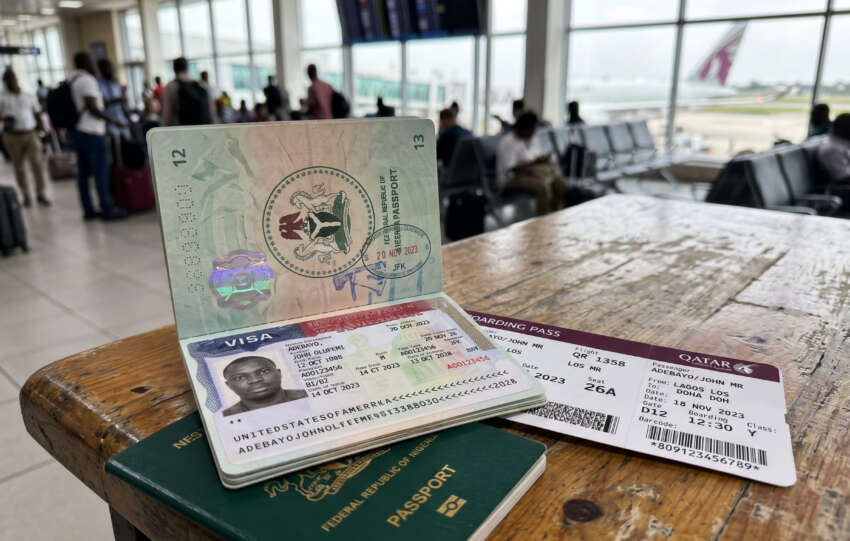


You opened the university page, saw that it wanted a Second Class Upper, looked at your own 2:2 or Third Class, and quietly closed the tab. In that small moment, you decided japa was for people with better grades than yours.
Let me stop you right there: that decision is wrong. A low CGPA does not automatically lock you out of studying abroad. It means you need a smarter route, a stronger application, and a school list built around what you can actually qualify for.
Every year, Nigerians with a 2:2, a Third Class, and HNDs receive offers abroad. Requirements vary by university and course, so confirm the specifics with each school, but these are the routes that can make your application competitive.
Can You Study Abroad From Nigeria With a Low CGPA?
Yes. Many universities accept a 2:2 directly, while pre-masters, graduate diplomas, foundation programmes and top-up routes can help applicants with lower classifications. Your academic result matters, but it is not the only part of your profile. Relevant work experience, a convincing statement of purpose, strong references, professional certifications and a well-matched course can all strengthen an application.
First, the reframe that changes everything
Universities abroad do not all assess applicants in the same way. Some apply strict grade cut-offs. Others review your full profile: work experience, references, statement of purpose, the relevance of the course to your background, and evidence that you can handle the programme.
A candidate with a Third Class and several years of relevant, measurable experience may be a better fit than a fresh graduate whose academic result is stronger but whose application gives the school little evidence of direction. The goal is not to pretend your grade does not exist. It is to show the progress, experience and focus around it.
If a school requests a credential evaluation, follow that school’s instructions. Do not assume that an evaluation will change your classification or remove particular courses from your transcript; it is an assessment service, not a shortcut around an institution’s entry requirements.

The routes built for your situation
If direct entry to a master’s feels out of reach, these options may be more realistic.
Pre-masters and graduate diploma programmes
These programmes can bridge the gap between your current qualification and a full master’s. They usually run for six months to a year and let you demonstrate academic readiness before progressing, subject to the provider’s progression conditions. Providers and university international colleges offer different routes, so check the course structure, cost and progression terms before paying a deposit.
Foundation and pathway programmes
For undergraduate applicants, foundation programmes can lead into a full degree after successful completion. They are often useful when your prior qualification, grades or subject background does not meet direct-entry requirements.
Postgraduate diplomas and college programmes in Canada
Some Canadian colleges may consider lower results for postgraduate diplomas. Treat post-study work and long-term immigration as separate questions: confirm that the exact school and programme are eligible for the outcome you want before applying. A college name alone is not enough.
Direct entry to flexible universities
Many UK universities openly accept a 2:2, and some consider a Third Class when the rest of the profile is strong. Target universities whose published entry requirements match your grade rather than applying blindly to schools that filter on grades before reading the rest of your application.
The work-experience route
Relevant professional experience can help, particularly for MBA and professionally focused master’s programmes. It does not override every academic requirement, but it can make a real difference where a university reviews applicants holistically.
HND top-up and conversion routes
HND holders may be able to pursue a top-up degree, a pre-masters or another conversion route. The right choice depends on the destination, institution and the course you want to study next.
How a stronger master’s can reset your academic story
Your bachelor’s result does not have to be the final word on your academic ability. A strong postgraduate result, relevant work and a clear professional record can give future admissions teams newer evidence to assess. That does not guarantee admission or funding, but it can make your application substantially stronger over time.
For scholarships, read the official eligibility criteria before applying. Some assess grades closely; others place significant weight on leadership, work experience, impact and career goals. Never assume a scholarship will overlook a requirement simply because another applicant once succeeded with a similar profile.
Destinations to research carefully
The UK has a wide range of pre-masters routes and universities that accept a 2:2. Canada has college and university options, but you must check the post-graduation work permit eligibility of the exact programme. Australia and European destinations can also offer pathway programmes and flexible admissions, but requirements differ sharply by institution and field.
Do not choose a destination only because someone calls it “easy.” Start with your course, budget, work history, language requirements and the immigration rules that apply when you will actually apply.

How to build an application that beats your grade
When your CGPA is not your strongest card, the rest of your application must do more work.
- Write a direct statement of purpose. Acknowledge your result where useful, give brief honest context, and show what changed afterwards.
- Build relevant experience. Paid work, internships, volunteering, projects and freelance work can demonstrate readiness for your next course.
- Add evidence of growth. Include relevant certifications, a portfolio, published work or measurable project outcomes where they support your chosen field.
- Choose referees who know your work. Strong references should give specific proof of your ability, not generic praise.
- Match the course logically. Make it clear why this course follows from your past studies and career goals.
- Use test scores strategically. Where a programme accepts them, a strong GRE or GMAT score may help demonstrate academic readiness. Check whether the school actually considers it before spending the money.
The study-visa truth
A low CGPA is usually not a standalone reason for a study-visa refusal once you have a genuine admission offer. But admission alone is not the visa. You still need to meet the requirements for your destination, including the right offer or CAS, finances, English evidence where required, and complete, credible documentation.
So the job is twofold: choose a programme that is realistic for your academic profile, then prepare a clean visa application that supports the offer you received.
The honest verdict
A low CGPA can close some doors. The most selective universities and highly competitive scholarships may remain a stretch, and pretending otherwise wastes application fees. But it does not close every door.
The smart move is to target a school with a route that fits your profile, build a record that speaks louder than one number, and make sure the cost and graduate outcome work for you. Play your whole hand, not your worst card.

Find the schools that will say yes
Do not spend months applying to universities that will filter you out. Use the School & Program Finder to surface institutions and pathways that fit your field and degree level. Use Scholarship Match to see funding options, and the Document Checklist to keep your application organised.
For the wider process, read the Study Visa From Nigeria guide, our guide to proof of funds, and study abroad without IELTS. If funding is your main worry, compare Chevening, Commonwealth and DAAD and explore fully funded scholarships for Nigerians.
Frequently asked questions
Can I study abroad from Nigeria with a Second Class Lower or a Third Class?
Yes. Many universities accept a 2:2 directly, and pre-masters, foundation and pathway programmes can create options for applicants with a Third Class or HND. Check each institution’s current entry requirements.
Does a low CGPA affect my student visa?
Your grade is usually not a standalone visa barrier after admission, but you must still meet the full visa requirements for your destination, including finances and documents.
Can a low CGPA still win a scholarship?
It can be harder, but some scholarships assess more than grades. Strong work experience, leadership, impact and a compelling application can help. Always check the official criteria first.
What is the fastest route to a master’s with a low CGPA?
A pre-masters or graduate diploma can be a practical bridge, while some universities may offer direct entry where your work experience and overall profile are strong.
Should I hide my low grade in my application?
No. Be honest. Give concise context where it is relevant, then show your growth and the evidence that you are ready for the course now.
A number from your third year does not decide the rest of your life. The routes exist; the important thing is choosing one that fits your profile and preparing thoroughly. The No-Agent Japa Blueprint can help you plan and apply without paying an agent for information you can understand on your own.