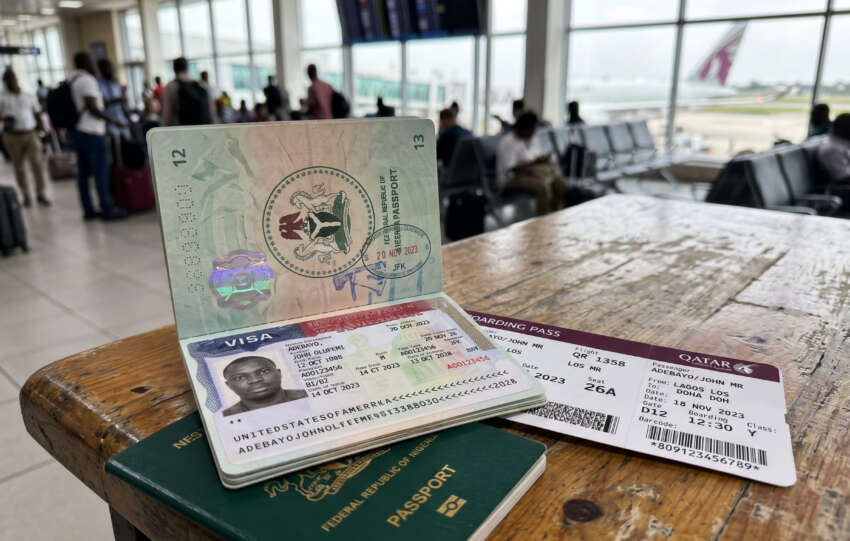


Most applications to study abroad or japa do not fail because the person was not qualified. They fail because one paper was missing, expired, or in the wrong format. The embassy does not chase you for it. They just refuse you, keep the fee, and move on.
So before you spend a kobo on applications, get your papers in order. This is the full checklist of documents you need to study abroad, relocate, or japa from Nigeria in 2026, grouped so you can work through it section by section. Tick each one off, and you walk into the embassy with nothing missing.
Your core documents
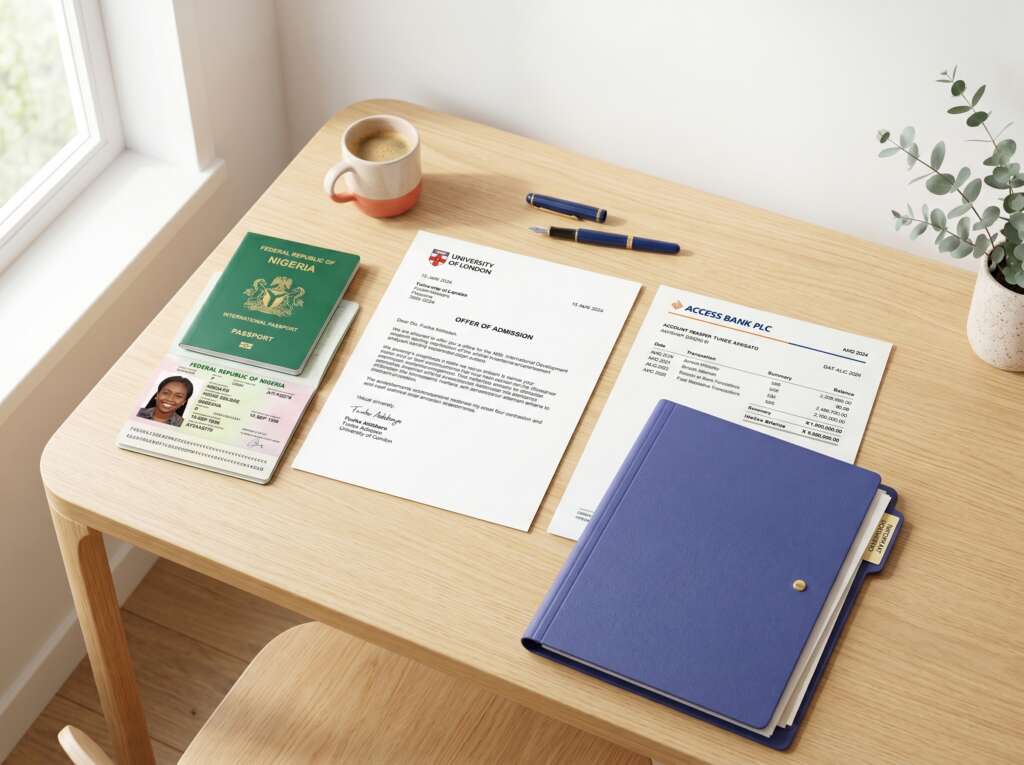
These are the non-negotiables. Without them, nothing else matters.
- International passport. Valid for at least the length of your stay, ideally with two years or more left. Check the expiry today, because passport delays in Nigeria can cost you a whole intake.
- Admission or offer letter. From a recognized university or employer abroad. This is what your entire application is built on. No admission, no visa.
- Passport photographs. Recently, the destination country has specified the exact background and size. Each country is fussy about this, so do not reuse old ones.
Your financial documents
This is the section that sinks most Nigerians, so treat it with the most care.
- Proof of funds. Evidence that you can cover tuition and living costs abroad. Remember, this is money you must show you have access to, not always money you spend. Work out your exact figure with the Japa Cost Calculator before you start.
- Bank statements. Usually, the last three to six months show a healthy, stable balance. Money that lands suddenly with no explanation raises a red flag, so plan your seasoning early.
- Sponsorship letter and sponsor documents. If a parent, relative, or employer is funding your move abroad, you need their letter, their bank statements, and proof of their relationship to you.
- Scholarship or funding award letter. If you have one, it can replace or reduce your proof of funds.
- Country-specific funds proof. A GIC for Canada, a blocked account for Germany, or maintenance funds in your own account for the UK. The format matters as much as the amount.
Your academic documents
- Degree certificate and transcript. Or your most recent qualification. Some universities abroad want these verified or sent directly from your school.
- WAEC or NECO results. Often still required, even at the master’s level.
- NYSC certificate or exemption. Frequently asked for by Nigerian scholarship boards and some visa routes.
- Credential evaluation. Some destinations, especially Canada through WES, want your Nigerian qualifications assessed against their system. Start this early, it takes weeks.
Your English test
- IELTS, TOEFL or PTE result. Whichever your school and country accept. Some waive it entirely, which we cover in our guide on how to study abroad without IELTS. Book the test early, because slots in Nigeria fill up fast.

Your visa application documents
- Completed visa application form. Filled exactly, with no contradictions against your other papers.
- Visa fee payment receipt.
- Biometrics appointment confirmation.
- Medical examination report. From an approved panel physician, required by Canada, Australia, and others.
- Travel and health insurance. Mandatory for Germany and most of Europe.
Your supporting documents
These are the papers that tell your story and convince the officer you are genuine.
- Statement of purpose or study plan. Why this course, why this country, and why will you follow the rules? This is your voice in the application, so make it count.
- CV or resume. Especially for work, relocation routes, and some scholarships.
- Reference or recommendation letters. Usually two, from lecturers or employers.
- Birth certificate and, if relevant, marriage certificate. Needed when the family is moving abroad with you.
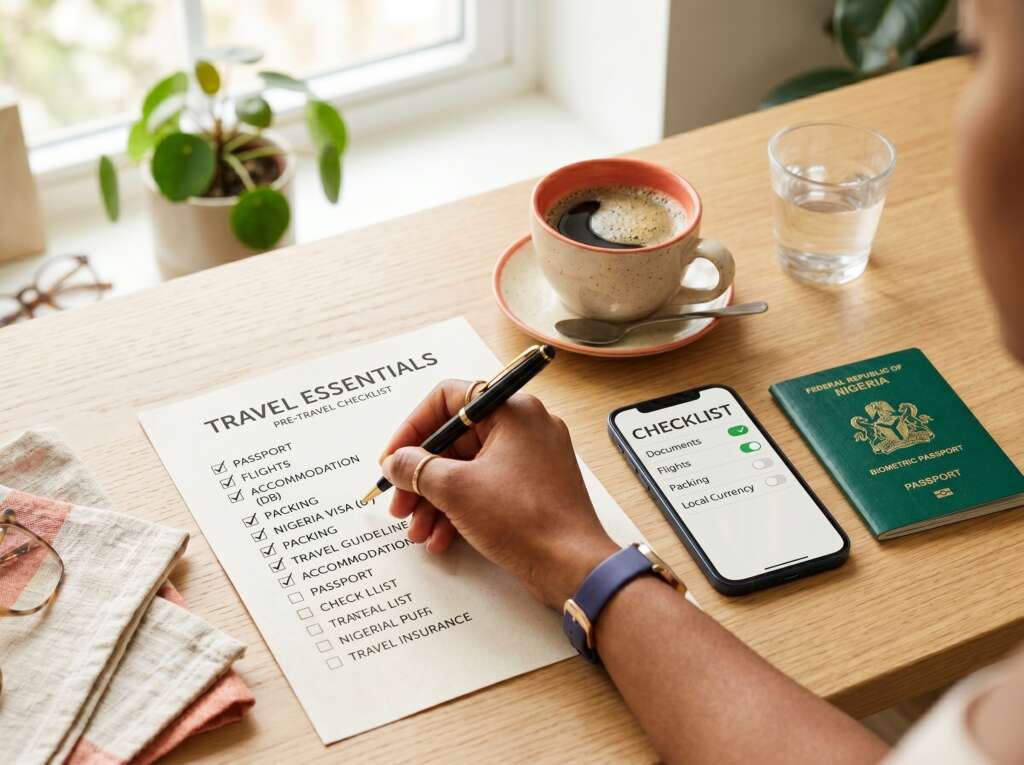
Want this as a tickable list you can print?
Reading a checklist is one thing; working through it is another. Use the Document Checklist tool to get a list tailored to your exact destination, tick each item as you gather it, and print it to PDF so you never walk into the embassy missing a paper.
A few rules that save applications
Start early, because the slowest items, your passport, credential evaluation, and English test, are the ones outside your control. Keep every document consistent: the same name spelling, the same dates, and the same story across every paper. And never submit a document you cannot back up, especially money. Officers are trained to spot funds that appear overnight.
Frequently asked questions
What documents do I need to study abroad from Nigeria? At the core: a valid passport, an admission letter, proof of funds, your transcripts and certificates, an English test result, and the visa application papers. Everything else supports those.
What is the most important document to japa? Your admission letter and your proof of funds. The first proves you have somewhere to go, the second proves you can afford to be there.
How early should I start gathering documents to relocate abroad? Nine to twelve months before you want to travel. The passport, credential evaluation and English test are the slow ones, so begin with those.
What document gets people refused the most? Proof of funds. Either the amount is short, the money arrived too recently, or it is in the wrong format for that country. Plan this one earliest.
Gathering the papers is half the battle. Knowing the exact order, the right format for each country, and how to present your funds so they are never questioned is the other half. The No Agent Japa Blueprint walks you through all of it, document by document, so you can study abroad or relocate yourself without paying an agent.