
Estimate your relocation budget in 2 minutes
Use the JapaMap cost calculator before you start any application.
Everybody wants to japa. The part nobody prepares you for is the money. The moment you start checking Canada, the UK, or the United States, the proof of funds alone can run into tens of thousands of dollars before you have even bought a ticket. So a lot of people give up too early, convinced that leaving Nigeria is only for people with deep pockets.
It is not. There is a whole tier of countries where the tuition is low or free, the cost of living is gentle, and you are allowed to work while you study. This guide breaks down the genuinely cheap places to japa to in 2026, what each one actually costs, and how to pick the one that fits your budget.
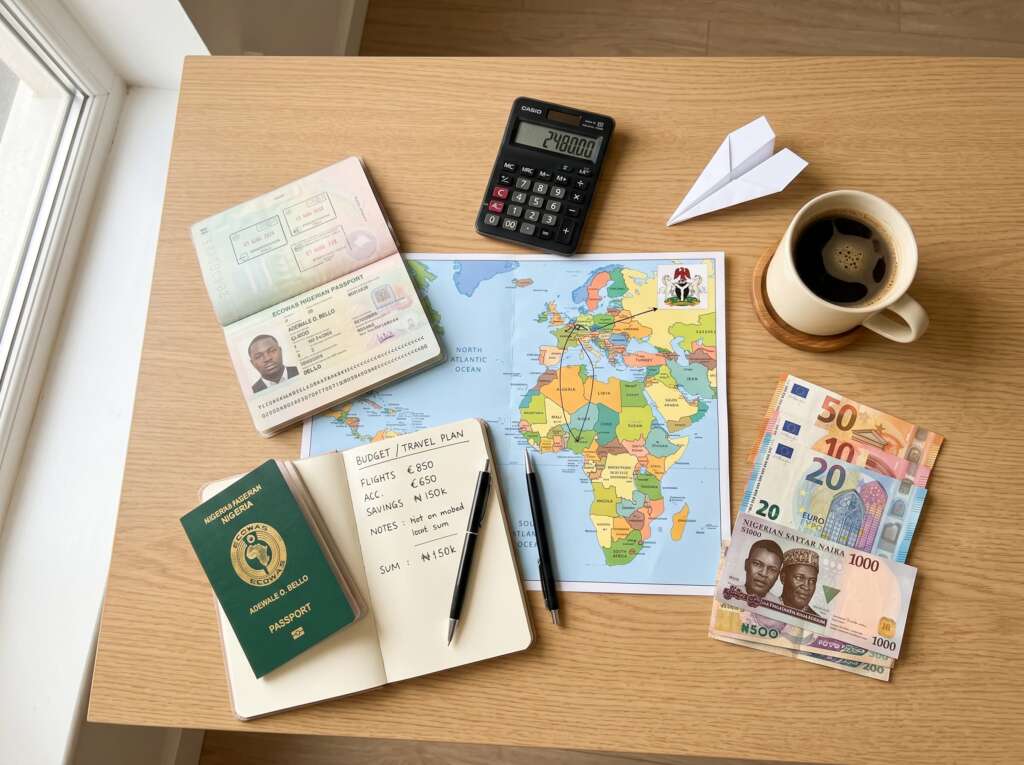
One thing before we start: cheap does not just mean low tuition. A country with free school but brutal living costs is not cheap. So we are judging each place on four things together: tuition, living costs, the proof of funds you must show for the visa, and whether you can legally work while you are there.
Germany: the overall winner
If you want one answer, this is it. Most public universities in Germany charge no tuition, even for international students. You only pay a semester contribution, usually around €250 to €350, which often covers your public transport for the whole term. Living costs in student cities like Berlin, Hamburg, and Leipzig sit around €800 to €1,000 a month.
The one number to plan for is the blocked account. To get the student visa, you must show roughly €11,904 for the year, which works out to about €992 a month. Remember, that is money you must prove you have, not money you lose. It is released back to you monthly to live on once you arrive. You can also work part-time, which makes the day-to-day far easier.
For a fully funded degree with a clear path to staying back and working after, nothing beats Germany on value.

Poland
Poland has quietly become one of the smartest budget moves in Europe. Tuition at public universities runs about €2,000 to €6,000 a year, and living costs are among the lowest on the continent at roughly €400 to €700 a month. Cities like Warsaw and Krakow are lively but still far cheaper than Western Europe, and many programmes are taught fully in English.
Hungary
Hungary pairs affordable tuition, about €3,000 to €7,500 a year, with low living costs of around €500 to €800 a month. The bigger draw is the Stipendium Hungaricum scholarship, a fully funded government programme that Nigerians are eligible for, which can wipe out tuition entirely and add a living stipend. If you are open to scholarships, Hungary deserves a hard look.
Czech Republic
The Czech Republic is cheaper than most of Western Europe. If you study in the Czech language, public universities can be free. Programmes taught in English are still affordable at roughly €3,000 to €8,000 a year, with monthly living costs around €500 to €900. Prague is the headline city, but smaller towns stretch your money even further.
Finland
Finland is the surprise on this list. Tuition for non-EU students looks high on paper, around €4,000 to €12,000 a year, but most universities offer tuition waivers of up to 100 percent for strong applicants, which can bring your real cost down to almost nothing. Living costs run from €800 to €1,500 a month, and you are allowed to work up to 25 hours a week. The education quality, especially in design, engineering, and technology, is world-class.
Romania
Romania is one of the most underrated cheap options in Europe. Tuition sits around €2,000 to €4,000 a year; living costs are low, and there are degrees taught in English. It rarely makes the loud lists, which also means less competition for places.
Malaysia: the option outside Europe
If Europe is not your target, Malaysia offers a respected English language education at a very low cost. Tuition is roughly the equivalent of a few thousand dollars a year, and the cost of living is a fraction of what you would spend in the West. It is a strong pick for anyone who wants an international degree on a tight budget without the European winter.
How do these compare to Canada, the UK, and Australia
To see why the list above counts as cheap, line it up against the popular expensive trio. Canada now asks you to show about CAD$22,895 in proof of funds, and that figure rises every year. Australia requires roughly AUD$29,710 a year in living costs on top of tuition that often runs past AUD$25,000. The UK expects around £1,023 a month in maintenance outside London, plus full tuition and a yearly health surcharge.
Proof of funds checker — know your exact bank balance target
Country-by-country requirements, updated regularly.
None of those are impossible, but next to a free German degree or a €2,000 Polish tuition, you can see exactly where the savings are.
Quick cost comparison
| Country | Tuition per year | Living per month | Notes |
|---|---|---|---|
| Germany | Free, plus ~€300 semester fee | €800 to €1,000 | Show ~€11,904 blocked account |
| Poland | €2,000 to €6,000 | €400 to €700 | Lowest living costs |
| Hungary | €3,000 to €7,500 | €500 to €800 | Stipendium Hungaricum scholarship |
| Czech Republic | Free in Czech, €3,000 to €8,000 in English | €500 to €900 | |
| Finland | €4,000 to €12,000, often waived | €800 to €1,500 | Up to 100% waivers |
| Romania | €2,000 to €4,000 | Low | Underrated, less competition |
| Malaysia | A few thousand dollars | Very low | Non European option |
Figures are current for 2026 and move often, so always confirm on the official university and embassy pages before you plan around them.
How to actually choose
Do not pick on tuition alone. Weigh the total: tuition plus living plus the proof of funds you must show, then check two more things that quietly decide everything. First, can you work while you study? That income changes your real cost. Second, what happens after you graduate, since a stay-back and work pathway is the difference between a degree and an actual relocation?
If a scholarship is on the table, like Stipendium Hungaricum or a Finnish waiver, that almost always beats a slightly cheaper tuition somewhere else.

Work out your own number
Every situation is different, so do not guess. Use the Japa Cost Calculator to get a real estimate for the country you are eyeing, broken down into what you actually spend and what you only need to show. And if you might qualify for funding, run Scholarship Match to see which scholarships fit your degree and grades before you spend a kobo on applications.
Frequently asked questions
Which is the cheapest country to japa to from Nigeria? Germany, because public university tuition is free, and you only pay a small semester fee. Your main cost is living, and the blocked account you must show for the visa.
Can I japa cheaply without a scholarship? Yes. Germany, Poland, the Czech Republic, and Romania are affordable even without funding because the tuition itself is low or free.
Do I need IELTS for these countries? It depends on the school and programme. Some accept other proof of English, and a few waive it entirely. Always check the specific university’s requirements.
Can I work while studying in these countries? In most of them, yes. Germany, Finland, and the others on this list allow part-time work, which helps cover your living costs.
Is proof of funds the same as money I will spend? No. Proof of funds is money you can show you have access to, such as a blocked German account. A lot of it becomes your living money once you arrive, so do not count it as a pure expense.
Picking the country is step one. The visa, the documents, the timing, and the application strategy are where most people get stuck. That is exactly what the No-Agent Japa Blueprint walks you through, step by step, so you can do it yourself without paying an agent.